Disclosure: Some links in this review are affiliate links, which means we may earn a small commission if you choose to make a purchase — at no extra cost to you. These commissions help support our research and keep Affiliate Pathways running. Thank you for your support.
Affiliate marketing is often promoted as a low-risk way to earn online — and that promise is what draws many people to platforms like Wealthy Affiliate. But not every affiliate program works for every beginner, and not every “all-in-one” solution lives up to the hype.
In this review, I take a clear, experience-based look at Wealthy Affiliate in 2025 — what it actually offers, where it works well, where it falls short, and who it’s genuinely suited for. If you’re wondering whether Wealthy Affiliate is worth your time, money, or effort, this review is written to help you decide before you commit.
Affiliate marketing has evolved rapidly over the last two decades, driven by improvements in online tools, payment systems, and educational platforms. What once required technical expertise and significant trial and error is now more accessible — at least in theory.
Platforms like Wealthy Affiliate position themselves as a response to this shift, offering an all-in-one environment that combines training, tools, and community support. The question isn’t whether affiliate marketing still works in 2025 — it’s whether Wealthy Affiliate is the right way for you to get started or grow.
1: What Is Wealthy Affiliate? (Background & Purpose)
The Wealthy Affiliate owes its existence to its two enterprising founders, Kyle Loudoun and Carson Lim, who started their enterprise in 2005. From that beginning they have come this far to become an industry leader in a highly competitive industry where success is defined by the ability to use the latest technological innovations (AI) and the human insight for deploying them effectively.
2: How Wealthy Affiliate Works
Wealthy Affiliate is underpinned by the founders’ own ethos of fostering affiliate marketing and online entrepreneurship in a flexible, enabling manner, so that both aspiring and experienced entrepreneurs can be accommodated on a single platform. The Wealthy Affiliate’s native user-network which functions as an advisory cooperative could be a learning tool in its own right.
Community support thus features one of the three fundamental concepts of the platform, the other two being continuous learning and the application of effective tools.
There are at least two immediate challenges that any entrepreneur can expect to face: start-up and growth. Each comes with distinct but interrelated challenges. The start-up phase requires the ability to conceptualise the project and after a period of due maturation bringing it on-line at a finite point in time. From then onwards, it is a matter of constant monitoring, refining, fine tuning to produce the desired results. Essentially, the question is one of finding the optimal functioning of the system. What produces the best overall results? This requires finding out which variables produce results and at what cost (advertising revenue vs. conversions, for example). Many iterations may be required in gaining the necessary insight into optimisation.
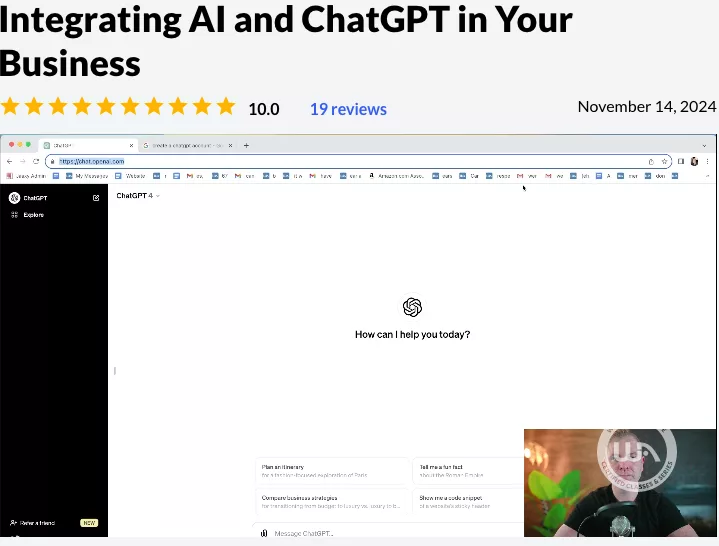
This is where technology can come into play. To cite an actual example, “Mastering ChatGPT and AI: Getting YOU Rolling With 5x Efficiency” that is a workshop offered by Kyle.
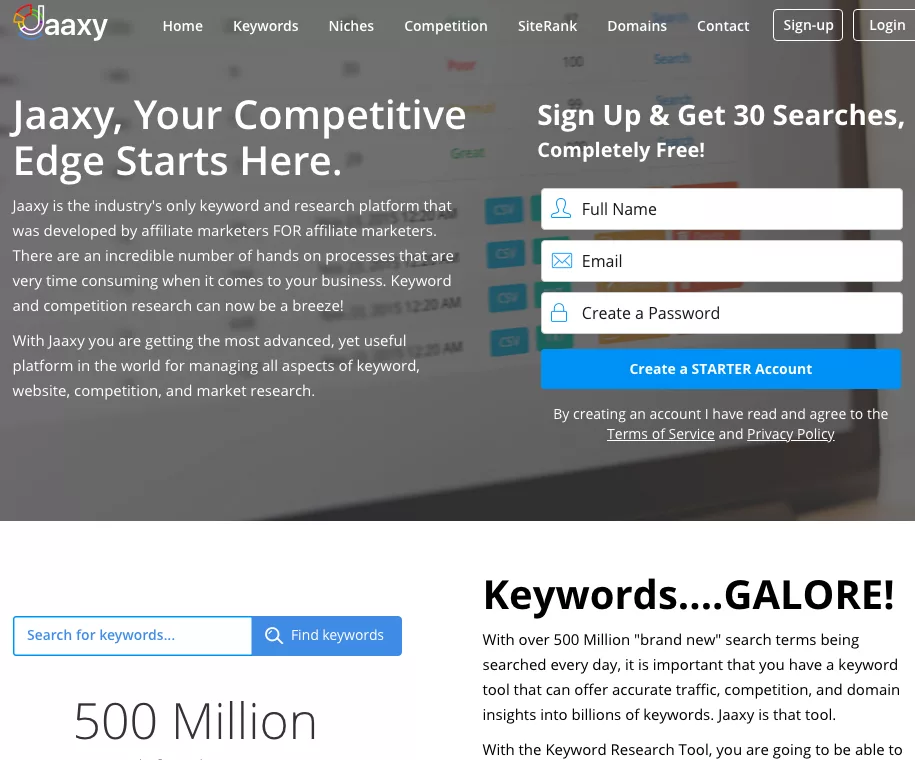
Another example of technology is Jaaxy itself a platform within the Wealthy Affiliate program, can tell the user which key words will enable them to rank high on Google. This process, a cornerstone of the Wealthy Affiliate program, is the SEO process — search engine optimisation. There are several processes at play at any one time, the monitoring of which using the relevant technologies spells the difference between success and the lack thereof. This is the problem that Wealthy Affiliate solves.
3: Getting Started: What Do You Actually Do?
Now that you understand the potential of Wealthy Affiliate, you may be wondering . . .
How do I start?
The Wealthy Affiliate addresses that question by breaking it down into a 4-step process: niche selection; website building; content creation; and monetisation.
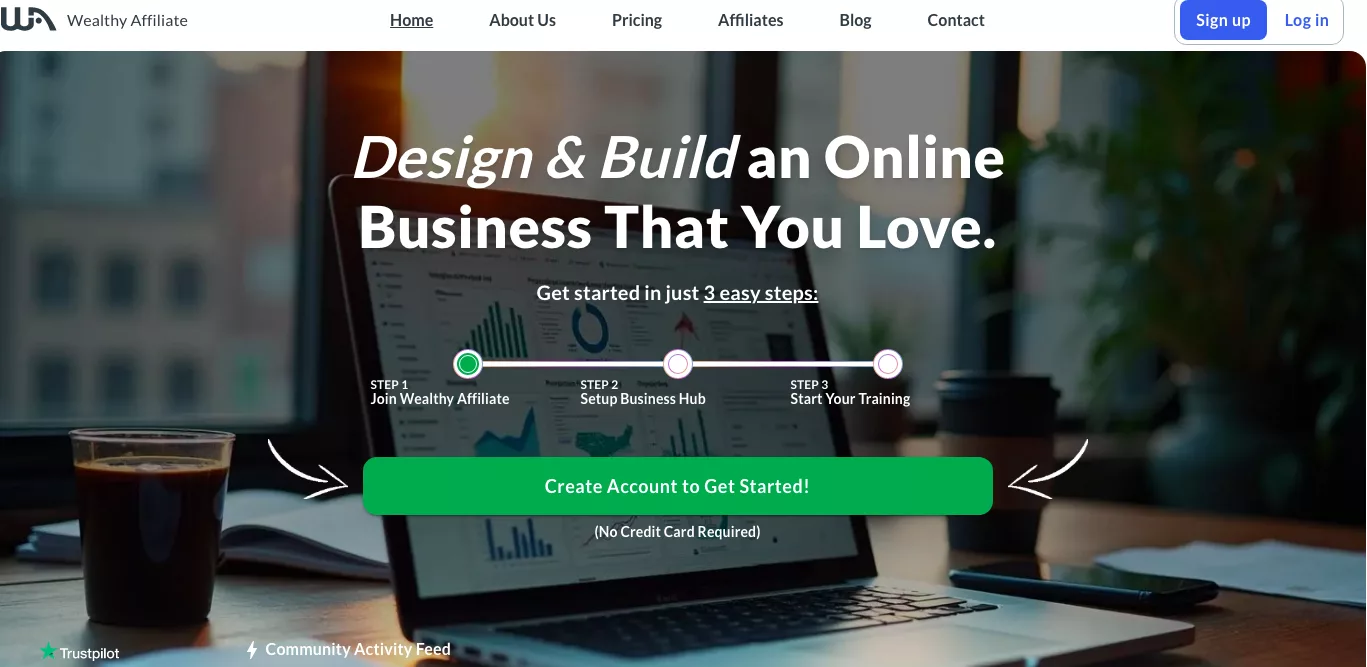
All four, we could say, are technologically assisted in some measure in order to make you transition smoothly into your chosen niche. Each action executed by you could take you a little bit them closer to your ultimate goal. Underlying this structure is the assumption that only concrete actions lead to concrete outcomes.
The best part: you can build your business with small, infinitesimal actions that cumulatively lead to building the whole business right from the moment you enrol — Wealthy Affiliate allows you to experiment with a free account.
4: Who Wealthy Affiliate Is Best For
Wealthy Affiliate works best for people who are willing to approach affiliate marketing as a long-term skill rather than a quick win.
In particular, it suits beginners and early-stage entrepreneurs who value structured learning, incremental progress, and a supportive environment. If you’re comfortable building your business step by step — experimenting, refining, and learning as you go — the platform’s design and pacing will likely feel aligned with how you think.
It’s also a good fit for learners who benefit from community interaction. The ability to ask questions, observe how others solve problems, and receive feedback in real time is a central part of the experience, not an add-on.
5: Who Should Avoid Wealthy Affiliate
Wealthy Affiliate is unlikely to be a good fit for those looking for shortcuts or rapid returns with minimal effort.
If your goal is fast monetisation through aggressive tactics, paid traffic funnels, or pre-built systems that promise immediate income, the platform may feel slow or restrictive. Its emphasis is on fundamentals, consistency, and skill development rather than automation-first strategies.
It may also not suit experienced marketers who already have established systems and prefer complete control over their tooling without guidance or community involvement. In that case, the structure that helps beginners can feel unnecessary.
6: Is Wealthy Affiliate Legit & Trustworthy?
Platforms which are high on trust tend to generate more engagement — and engagement in turn increases the chances of positive outcomes, leading to more productive use for its users.
The Wealthy Affiliate has a 4.9 out of 5 star rating system on Trust Pilot. It also has an A+ rating from The Better Business Bureau (BBB).
7: Community, Support & Learning Environment
The Wealthy Affiliate Community (accessible after joining) is at the heart of the program. Users can post their queries and musings as they build their business whose growth is fostered by mutual support. The process could be likened to that of living in neighbourhood where folks look out for each other.
Building a business is also an intense emotional process that we must never underestimate. We owe it to ourselves to take care of our mental health as well as our physical health.
The ethos of teamwork is welded into the culture of the Wealthy Affiliate — something that derives from the founders own experience in their industry, no doubt.
The Wealthy Affiliate member enters the game supported — not just by technology but by living humans. It’s the best of both worlds.
8: Pricing, Upsells & Value for Money
The Wealthy Affiliate has two levels of membership — Starter; and, Premium Plus, each tier with its own set of features. “Starter,” is free, and as mentioned above, and therefore offers the best try-before-buy option, so that once you’re satisfied that this will work for you, you can then upgrade to Premium Plus for added features. You can explore the pricing details directly on Wealthy Affiliate.
This feature alone should recommend this program to any aspirant because it is zero-risk. With the two paid programs, there are two options: a monthly and a yearly payment, with the latter providing saving options.
The buyer is encouraged to do their own due diligence, nevertheless — with this caveat though: competing offers are not necessarily competitive offers; if something is cheaper, ask why it is cheaper relative to another offering.
In regard to comparing programs, the buyer needs to consider this question. What are the up-sells? A high quality program is one with fewer if any up-sells. They are made unnecessary if the seller has confidence in their brand. Depth rather than surface area is the hallmark of a good product.
Wealthy Affiliate, I am happy to report, displayed no apparent up-sells.
So far we have been considering the commercial aspects of this program. That is, however, not the only aspect that a buyer should consider in assessing cost effectiveness. The real value of a program lies in how it has been put together, its design and what considerations underwrite it. To our detriment, we generally tend to dismiss design, confining its meaning to only aesthetic aspects — although aesthetic aspects are not to be dismissed summarily (imagine, toiling on an eyesore of a platform for long hours– that could be so soul-destroying). Design can be both aesthetic and functional. Think Michelangelo.
Effective design means effective learning. Before buying into a program you need to consider this aspect carefully. After all, a platform like this has one primary function: to facilitate your acquisition of the essential skills required for running your upcoming affiliate business.
A two-tier structure has many advantages, not the least of which is that it eliminates clutter from the outset. Consequently, there are fewest if any distractions in this program. In fact, an underlying sense of cohesion holds the content of all the three tiers together both internally as well as externally (between the tiers). This feature allows the program to maintain a forward momentum by whetting the learner’s appetite for more learning — it gives the learner something to look forward to at each point. This is a very dynamic organisation, enabled by smooth, frictionless transitions.
Consciously or unconsciously, this configuration has been designed to make Wealthy Affiliate emotionally relatable for the learner and seems intrinsically aligned to the learner’s aspirations of mastering not only the critical skills but becoming financially independent, consequently. Lessons are designed as small, eminently achievable steps (which alone incentivises learning), moving progressively towards the larger goal. I characterise this as: incentivising without overwhelming.
Last but not the least, the platform incorporates an efficient AI-driven article generator which makes short work of writing articles — an indispensable task in this field.
Final Thoughts
Wealthy Affiliate is neither a shortcut nor a guarantee — and that’s precisely why it works for the right kind of person. Its strength lies in structure, patience, and a learning-first approach that treats affiliate marketing as a skill to be developed rather than a trick to be exploited.
If you value steady progress, clear fundamentals, and a supportive environment while you build, Wealthy Affiliate offers a coherent and thoughtfully designed path forward. If, on the other hand, you’re looking for rapid returns or pre-built systems that promise instant results, this platform may not align with how you want to work.
As with any meaningful undertaking, the outcome depends less on the tools themselves and more on how — and why — you use them. The right platform is the one that supports the way you learn, build, and commit over time.